General
-
021 Auto Leasing
Most luxury lease decisions go sideways because the shopper picks the badge before the use case. This playbook flips the order so the quote conversation is honest from the start.
Fast answer: who this playbook is for
This guide is for California shoppers comparing premium brands like Mercedes-Benz, BMW, Lexus, Audi, Porsche, Volvo, and Cadillac, and weighing SUV, sedan, or EV body styles. It is built for people who want the right car at the right contract structure, not the lowest possible monthly payment. If your top priority is the cheapest published number you saw on a brand site, this is the wrong playbook. Lease quotes are time-sensitive, model-specific, and program-driven, and the published-payment shortcut almost always hides terms a careful shopper would want to negotiate. The five-decision framework below is the same skeleton 021 uses internally to triage California luxury lease requests before any number is quoted.
The five decisions to make before you ever look at a payment
Decision one: body style. SUV, sedan, EV crossover, performance coupe, or full-size three-row each implies a different price band and a different contract shape. The honest test is to count how many days a week your second row, third row, or cargo area was actually loaded over the last three months. The number rarely matches the number people imagine when they walk into a showroom. Decision two: powertrain. Gas, hybrid, plug-in hybrid, and battery-electric leases behave differently because incentives, residual values, and fuel-cost models diverge sharply between them. The right powertrain question is not 'which is greener' but 'which one matches my actual driving inputs.' Decision three: term and mileage. The 24-month, 36-month, 39-month, and 48-month brackets each pair with different annual mileage tiers, and the wrong pairing produces either overage exposure at the end or wasted lease value up front. The honest annual mileage number is the one your insurance has been showing for two years, not the one that produces a better-looking quote. Decision four: due-at-signing posture. A drive-off-only lease, a one-pay lease, and a first-payment-plus-fees lease are three different financial products even when the monthly is identical. A sign-and-drive payment looks lower on the cover page but shifts cap-cost reduction into a different place in the deal; a one-pay lease reduces the rent charge but locks substantial cash up front. Decision five: end-of-lease intent. Walking away, buying out, transferring, and re-leasing all change which contract is actually 'cheap.' A shopper who knows they will buy out at the end should not over-optimize the residual; a shopper who plans to walk should treat residual as a hard ceiling on real cost. Most California luxury shoppers commit to a brand before they have answered any of these, and the dealer or broker conversation then has to retro-fit the car to the desire rather than match the contract to the life.
How California changes the luxury lease conversation
California adds a registration framework, a vehicle license fee that scales with vehicle value, and a sales/use tax structure that almost every luxury lease will encounter at delivery and at every monthly payment. The California DMV publishes the registration framework and a fee calculator that lets a careful shopper preview the registration component before any dealer hands over a contract. The fee calculator's output is the line you should expect on the lease worksheet, and discrepancies between calculator output and dealer worksheet are worth flagging in writing rather than absorbing as 'normal dealer fees.' Smog inspection rules also matter: California exempts new vehicles from smog inspection during the first window of ownership, which removes a friction step for first-time leasers but becomes relevant if the lease is later transferred. EV-specific incentives are time-sensitive and policy-driven, and any claim about a current rebate, federal credit, or pass-through requires a fresh check on the IRS Clean Vehicle program for new purchases, the IRS Commercial Clean Vehicle credit which sits behind many lease pass-throughs, and the California Air Resources Board's clean-vehicle programs. None of these can be quoted from memory; all of them can be quoted from the agencies' own pages on the day the contract is signed. That is the gap a careful shopper closes. Beyond the state-level layer, California also adds geographic friction that almost never shows up in a brochure: peninsula and South-Bay parking, beach lot turnover, hillside garage geometry, and intra-city commute density all interact with body-style choice in ways that compound across a three-year lease. A vehicle that fits the badge but not the geography is a vehicle whose monthly payment looks fine and whose ownership experience does not.
Premium SUV, sedan, EV, and performance lanes
Most California luxury lease decisions land in one of four lanes. The premium SUV lane covers compact luxury (Mercedes-Benz GLC, BMW X3, Audi Q5, Porsche Macan, Lexus NX), midsize luxury (Mercedes-Benz GLE, BMW X5, Lexus RX, Volvo XC90), and three-row luxury (Mercedes-Benz GLS, BMW X7, Range Rover, Lexus TX). The sedan lane covers sport-luxury (Mercedes-Benz C-Class, BMW 3 Series, Audi A4) and executive (Mercedes-Benz E-Class, BMW 5 Series, Lexus ES). The EV lane covers premium crossovers (Tesla Model Y, Mercedes-Benz EQB, BMW iX, Cadillac LYRIQ) and EV sedans (BMW i4, Mercedes-Benz EQE, Tesla Model 3). The performance lane covers AMG, M, RS, and GT-class subbrands. Each lane has a different residual-value pattern, a different program cadence, and a different California-fit profile, which is why the right lane is decided before the right model. A shopper in the EV lane who tries to use a sport-luxury sedan workflow will end up with a contract that ignores the parts of the deal that actually move the number. The four lanes also imply four different conversation partners. A premium SUV lease quote conversation is dominated by trim, option packages, and third-row availability where applicable. A sedan quote is dominated by trim and performance subbrand decisions. An EV quote is dominated by range, charging ecosystem fit, and the incentive verification step. A performance-subbrand quote is dominated by program cadence on the higher-trim residual table, which can behave very differently from the base trim within the same model line. Treating all four with the same script produces friction at the most expensive moment of the deal.
What to ask before comparing any two luxury lease quotes
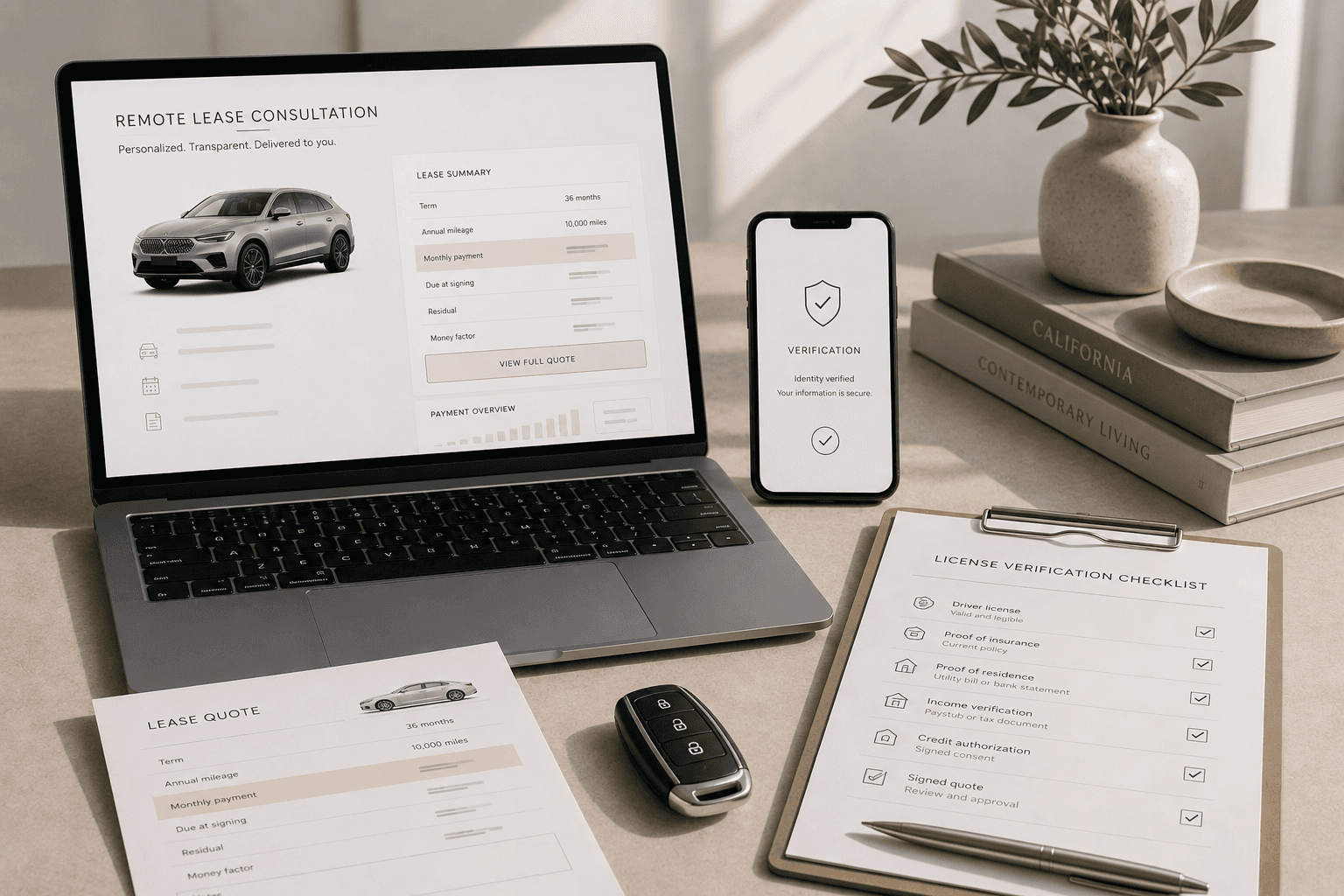
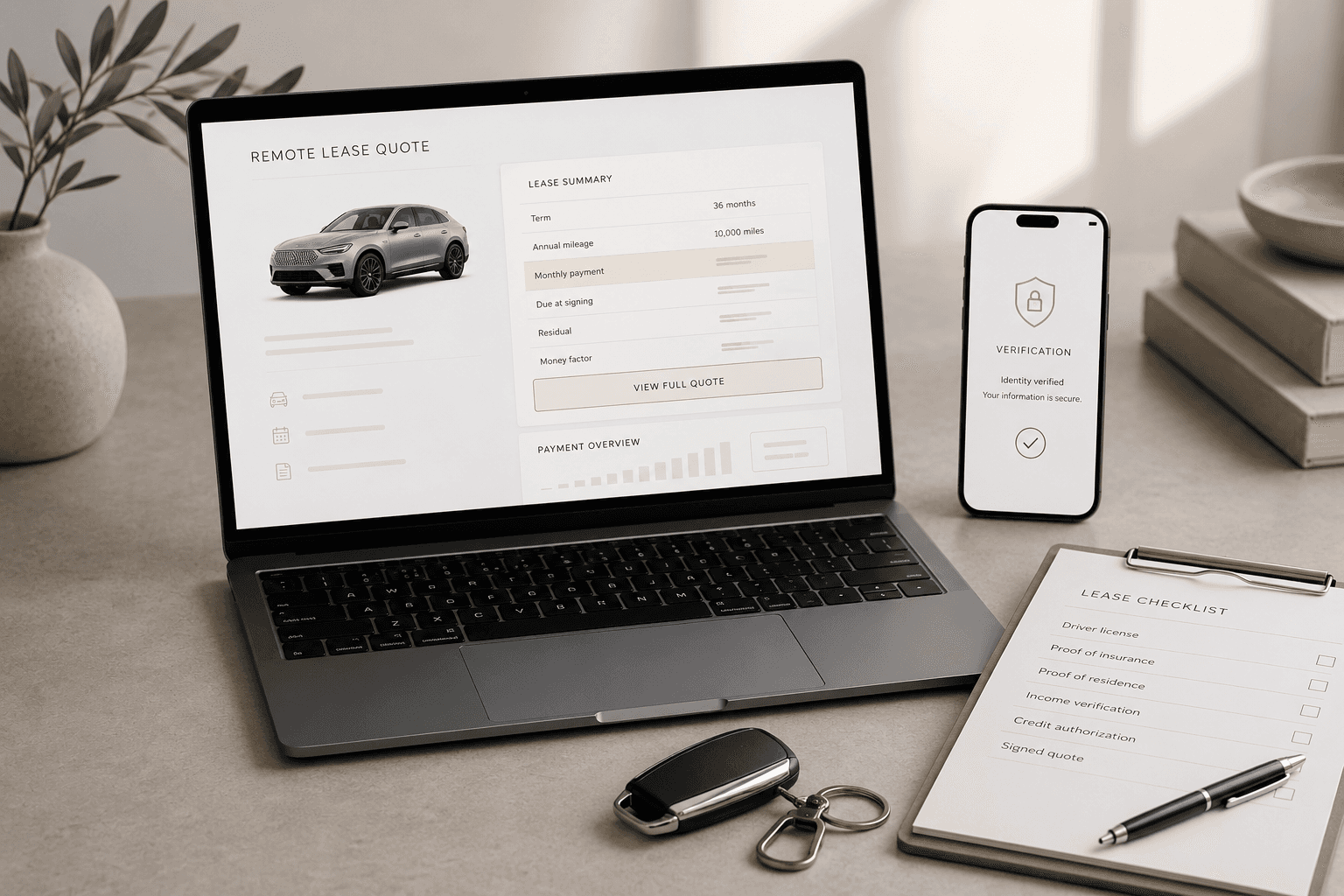
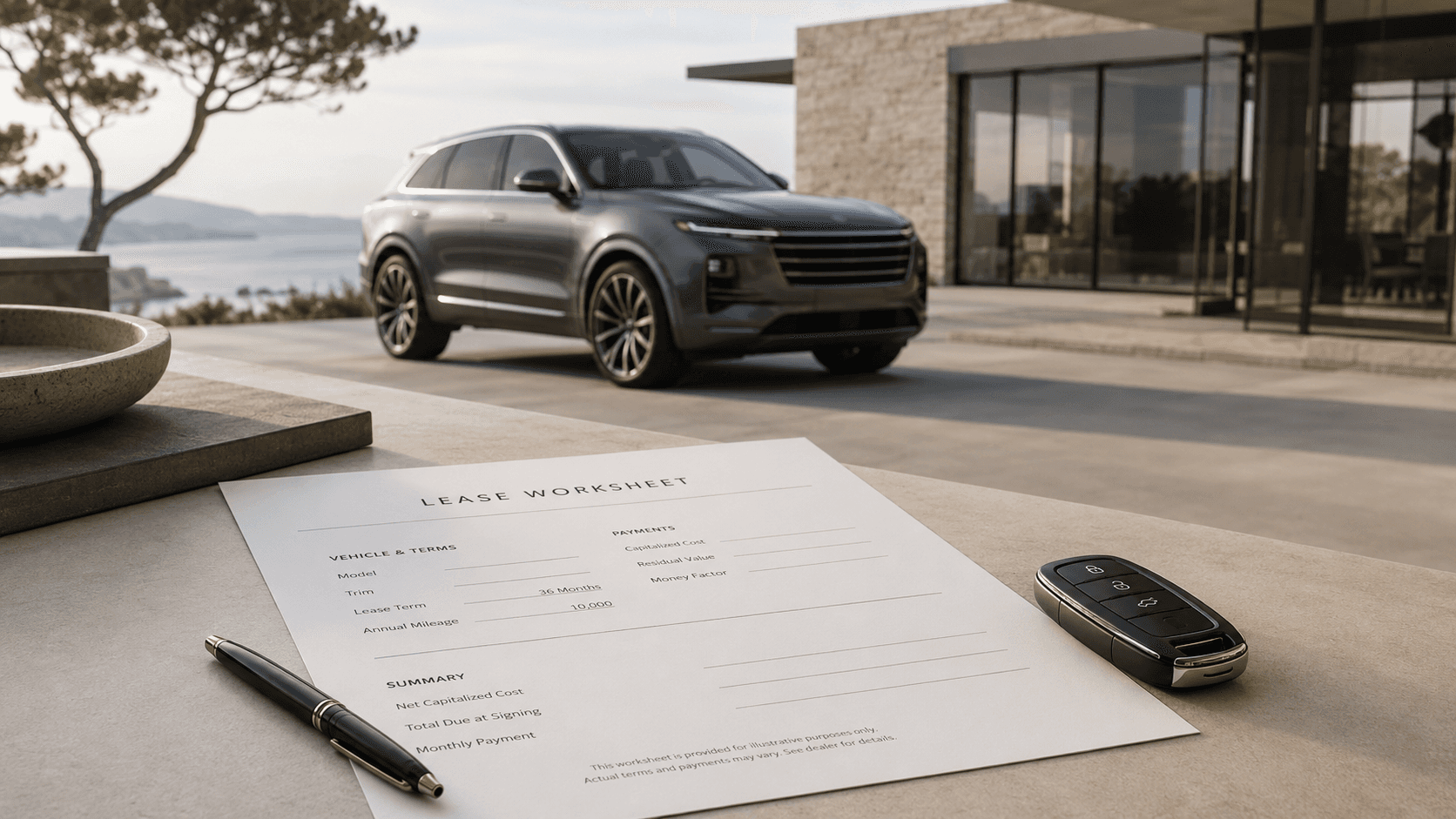
Two lease quotes are only comparable when the same vehicle, the same trim and option package, the same lease term in months, the same annual mileage, the same due-at-signing posture, and the same disclosed money factor and residual basis are visible side by side. Reg M, the federal consumer-lease regulation, requires the lessor to disclose specific fields before the consumer becomes obligated, including capitalized cost, residual value, rent charge, total of payments, and applicable fees. Asking for those fields at the quote stage is not aggressive negotiation; it is the same disclosure the law requires at signing, just earlier. A useful shortcut is to write a one-page request that asks every dealer or broker to quote the same exact vehicle, the same exact term, and the same exact mileage, and to disclose money factor, residual percent, total drive-off, and any acquisition or disposition fees in writing. If a quote refuses to disclose those items, that quote is not comparable; it is a marketing payment. There are a small number of common quote-shape mistakes worth flagging up front. Quoting at a shorter mileage tier than the shopper actually drives makes the monthly look lower while loading overage exposure at the back end. Capitalizing acquisition or registration fees into the monthly without flagging it makes the headline payment look smaller while increasing total of payments. Bundling all 'fees' into one line item makes line-by-line comparison impossible. None of these are necessarily fraud; many are normal sales practice. They are reasons to slow down, request the missing disclosure, and continue the comparison with the corrected quote in hand.
Where to go next by brand, body style, and powertrain
If you are leaning Mercedes-Benz, the brand-specific shopping guide breaks the lineup into SUV, sedan, and EV lanes and points to the matching model lease pages. If you are deciding between premium SUVs without a brand bias, the family SUV sub-tower covers midsize and three-row comparisons. If your conversation is mostly about charging and commute, the premium EV commuter sub-tower goes deeper on charging access, range patterns, and quote caveats. If you already have one or more written quotes, the luxury lease quote checklist is the next stop and is built to be printed alongside the offers. If you want a single conversation that pulls all five decisions and California friction into one quote-review session, the request-a-quote and beat-my-deal endpoints are the right next click. The point of this playbook is not to choose for you; it is to make sure the next conversation you have starts at the right altitude.
Frequently Asked Questions
Is leasing a luxury car in California more expensive than other states?
California adds a vehicle license fee that scales with vehicle value plus a sales or use tax that, on a lease, is generally collected on each monthly payment rather than the full vehicle price. Whether the all-in California cost is higher than another state depends on that state's own registration and tax rules, so the right comparison is always your specific quote against the California DMV fee calculator output, not a memorized rule of thumb.
Should I lease a luxury EV or a luxury hybrid in California?
The decision is mostly a charging and routine question, not a badge question. If you have predictable home or workplace charging and your typical day is well inside the EV's EPA range, the EV lane usually wins on operating cost. If your charging access is uncertain or your routine includes long unplanned drives, a hybrid or plug-in hybrid removes the access risk while keeping most of the efficiency. Run your numbers against fueleconomy.gov and verify any incentive claim against the IRS and California programs the day the contract is finalized.
How long should my luxury lease term be?
Match the term to the warranty and the mileage you actually drive, not to the headline payment. A shorter term often pairs cleanly with the bumper-to-bumper warranty; a longer term can lower the monthly but stack overage exposure if mileage creeps. The right term is the one that keeps you inside warranty coverage and inside your real annual mileage with margin to spare.
Can a broker really change the outcome of a luxury lease in California?
A broker can shape three things: which lender's program is used, how the cap cost and residual structure are presented, and whether the disclosed Reg M fields are clean before signing. A broker cannot change the manufacturer's residual table, the lender's money factor for your credit profile, or the fees the DMV charges. The honest pitch is that the broker's value is in clarity and program selection, not in invented savings.
Related 021 resources: Mercedes, BMW, and luxury lease lineup, lease pricing explainer, buy vs lease comparison, Mercedes-Benz lease shopping guide, premium SUVs for California families, premium EVs for California commuters, luxury lease quote checklist, request a personalized quote.