General
-
021 Auto Leasing
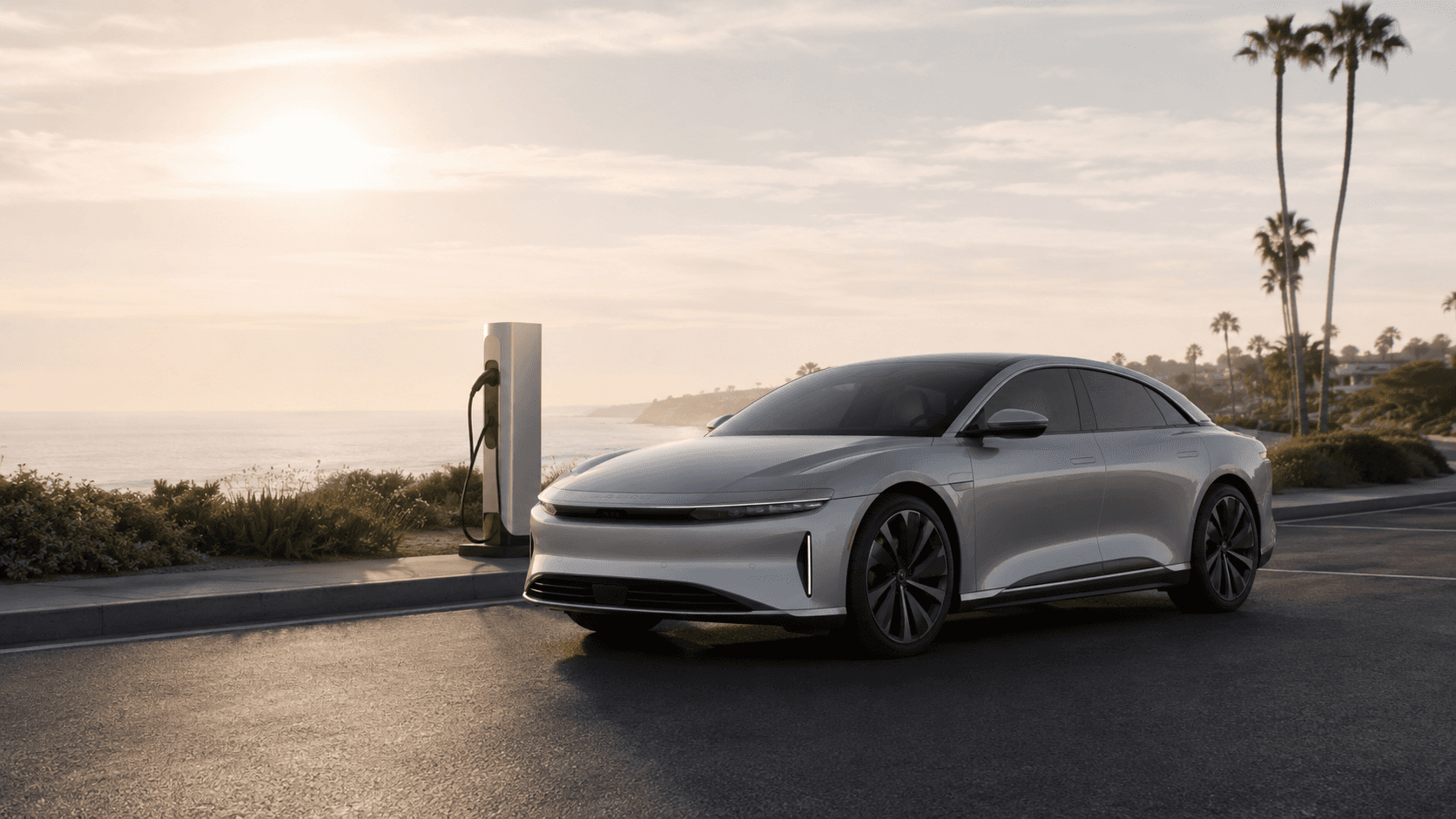
A premium EV lease is mostly a charging-and-routine decision. The right EV is the one whose EPA range, charging ecosystem, and lease quote line up with the way you actually commute, including the rushed mornings, not only the calm ones, and the long-weekend trips, not only the daily commute.
Fast answer: who this guide is for
This guide is for California commuters considering a premium EV lease across four popular options: Tesla Model Y, BMW i4, Mercedes-Benz EQB, and Cadillac LYRIQ. The filter is commuter use rather than enthusiast performance or pure family hauling. If your daily mileage is predictable, your charging access is identifiable, and your backup plan for a long unplanned trip is realistic, an EV lease can be excellent. If any of those is uncertain, the lease can become a daily friction generator. The four candidates here all have public, manufacturer-confirmed positions in the premium EV market, and the Tesla, BMW, Mercedes, and Cadillac model pages are the source of truth for current configurations and powertrains.
The five-question EV readiness test
Before any model question, run a five-question readiness test. Question one: where will you charge most nights? Single-family home, apartment garage, workplace, or public DC fast charging. Question two: how many miles is a typical day, including detours? Question three: how often do you take an unplanned trip beyond two hundred miles round-trip? Question four: what is your backup vehicle if the EV is at home charging and you need to leave immediately? Question five: how do you feel about the charging stop pattern on your most-used long-distance route? If four of five answers are clean, an EV lease is a reasonable next step. If two or more answers are uncertain, the honest move is to either solve the uncertainty first or look at the EV-or-hybrid decision child post before committing to a three-year contract.
How the four candidates differ on commuter fit
The Tesla Model Y leans into the Supercharger network and a tight software ecosystem; Tesla publishes the model and charging support pages that describe the network integration. The BMW i4 sits in the premium EV sedan lane with a driving-feel focus and integrates with non-Tesla networks plus, for vehicles equipped with the relevant hardware and access, the broader DC fast-charging environment described on the BMW i4 page. The Mercedes-Benz EQB is a compact electric crossover with a more traditional Mercedes cabin character, useful for shoppers who want EV operation without a Tesla-style interaction model; the EQB page is the source of truth for current configurations. The Cadillac LYRIQ is a midsize premium electric SUV with a different scale and interface from the EQB, with the LYRIQ page describing trims and powertrain. None of this is a substitute for the manufacturer's current page on the day of signing, which is where range, MPGe, and trim availability should be confirmed.
Home, workplace, and public charging in California
Home charging on a 240-volt circuit is the most cost-effective and predictable charging mode for most California EV owners. Workplace charging is the second-most-predictable if your employer has an established program. Public DC fast charging is the most flexible but the most variable in cost per kilowatt-hour and in availability. Tesla's Supercharger pages describe Supercharger access for Tesla vehicles and, for non-Tesla vehicles, the access pattern that depends on adapter availability and regional rollout. EPA fueleconomy.gov is the canonical reference for any specific EV's MPGe and range, and the EV readiness checklist linkable asset goes deeper on apartment and condo charging. The point is that 'I have charging access' is a compound claim that needs to be true for the days when you are tired, busy, or rushed, not just the days when you are calm. A useful test is to imagine the worst week of the last year (sick child, late meeting, traffic incident, dead battery on a second vehicle) and ask whether your charging plan would still have worked. If the answer is yes for both weekdays and weekends, the EV plan is robust; if the answer is 'usually,' a plug-in hybrid often closes the gap; if the answer is 'sometimes,' a conventional hybrid is often the safer lease.
Incentive caveats every California EV leaser should treat as live
EV incentives are time-sensitive. The federal Clean Vehicle Credit (Section 30D) for purchases and the federal Commercial Clean Vehicle Credit (Section 45W), which sits behind many lease pass-throughs, both have IRS-published rules that can change between vehicle, lessor, and buyer. California's clean vehicle programs publish their own eligibility frameworks. Any specific incentive claim about 'how much you save by leasing' must be verified the day the contract is signed against the IRS pages and the California program pages, not from a memorized rule of thumb. Lessors that pass through credits are required to disclose the basis, and Reg M still applies to the remainder of the lease disclosure. The conservative posture is to ask the lessor to show the incentive treatment in writing, then verify against the agency page on the same day. The most reliable shopper-side moves are: (1) take a screenshot of the lessor's written incentive treatment, (2) take a same-day screenshot of the IRS or California program page that supports the eligibility, and (3) keep both for the duration of the lease in case the program changes mid-term.
Quote variables to compare on a premium EV lease
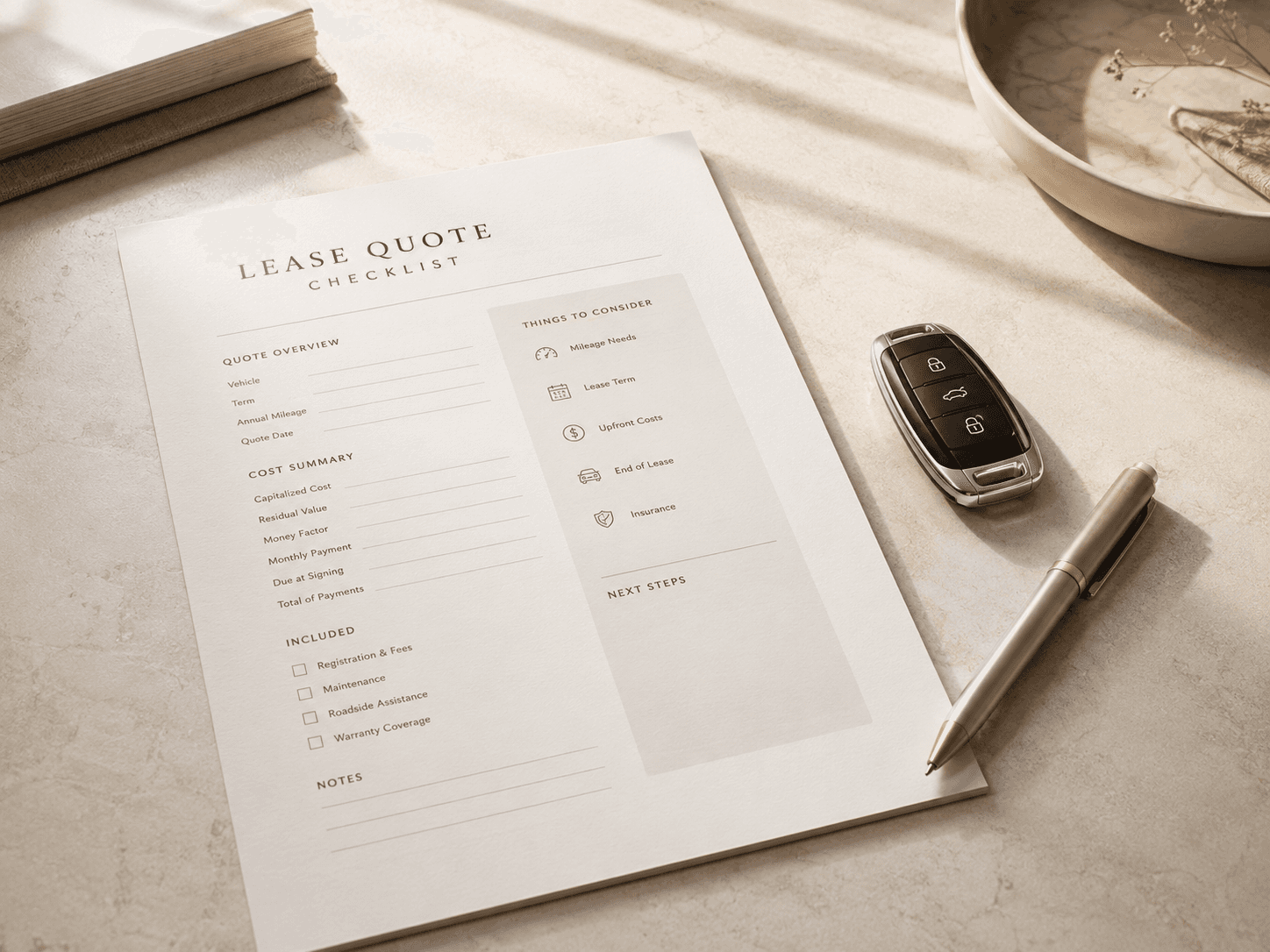
Treat a premium EV lease quote with the same comparability discipline as a gas lease. Lock the same vehicle, same trim, same option package, same term, same mileage, and same due-at-signing posture across all quotes. Ask each lessor for capitalized cost, money factor, residual percent, total drive-off, acquisition fee, and disposition fee in writing. Then add the EV-specific question: how is any incentive credit handled, what is its source, and is the eligibility re-confirmed on the day of signing. The luxury lease quote checklist linkable asset is built to be printed alongside premium EV offers as well as gas offers, and the 021 quote-review service applies the same discipline. A subtle EV-only pitfall: residual percent on EV leases can move with battery technology cycles and program decisions in ways gas leases rarely do, so two EV quotes that look similar on the cover page can have very different total-of-payments figures even at the same money factor.
Where to go next
If you are between Tesla and Mercedes, the Model Y vs EQB lateral compares the EV workflow side by side. If you are between Cadillac, BMW, and Tesla, the LYRIQ vs i4 vs Model Y lateral covers the three-way decision. If you are deciding whether to go EV at all, the EV-or-hybrid child is the right next stop. If you are an apartment or condo dweller, the EV lease readiness checklist linkable asset goes deeper on the charging-access question.
Frequently Asked Questions
How much does a premium EV lease cost in California?
Lease cost depends on vehicle, trim, lender program, residual percent, money factor, term, mileage, due-at-signing posture, and any incentive treatment. There is no single premium EV lease price; there is a quote conversation. The luxury lease quote checklist sets up that conversation, and any current-payment claim should come from a written quote, not a published headline.
Will I get a federal EV tax credit if I lease?
Federal EV credits for new vehicle purchases are governed by IRS Section 30D, while the Commercial Clean Vehicle Credit (Section 45W) governs many lease pass-throughs. Whether and how the credit reaches you on a lease depends on the lessor, the vehicle, and the program rules in force at signing. Verify against IRS pages and ask the lessor to disclose the treatment in writing on the day of signing.
Is a Tesla Model Y better than a Mercedes EQB for California commuting?
It depends on what 'better' means. The Model Y's network integration is a strong asset for shoppers who value Supercharger access; the EQB's cabin character and compact crossover format are strong assets for shoppers who want a more traditional premium feel. The Model Y vs EQB lateral comparison runs the side-by-side fully.
What if I live in an apartment without dedicated charging?
Apartment and condo charging in California is solvable for some readers and a real constraint for others. The EV lease readiness checklist linkable asset walks the scenarios for renters and condo owners and points to where the question becomes a reason to lease a hybrid or plug-in hybrid instead, especially when HOA rules limit installation.
Related 021 resources: Tesla Model Y lease, BMW i4 lease, Mercedes-Benz EQB lease, Cadillac LYRIQ lease, Model Y vs EQB, LYRIQ vs i4 vs Model Y, EV or hybrid lease in California, EV apartment readiness checklist.