General
-
021 Auto Leasing
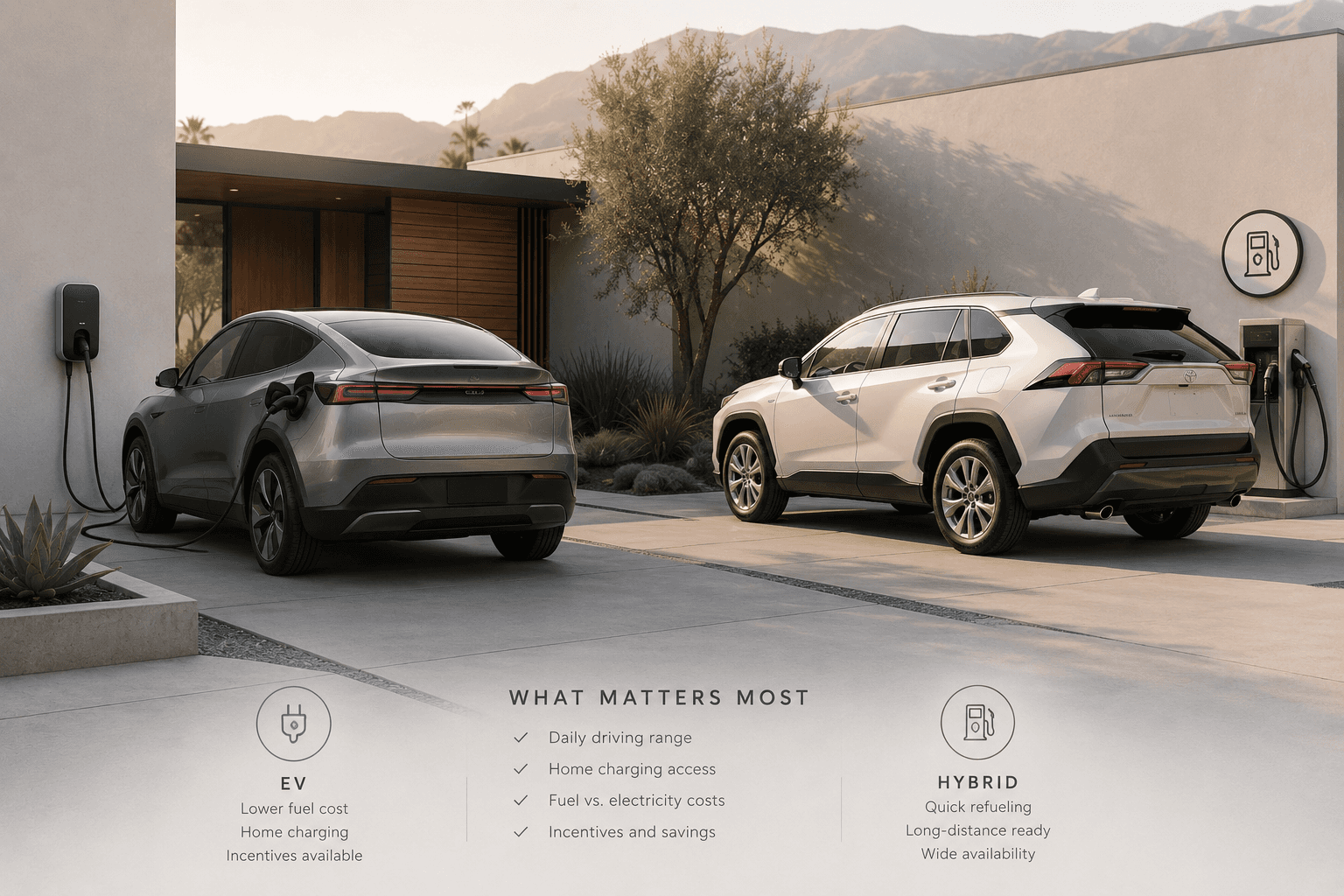
EV vs hybrid leasing is a charging-and-routine decision first and an incentive decision second. The honest answer is whichever option fits your access, your mileage, and your calendar.
Fast answer: how this decision should run
Run two sub-decisions in order. Sub-decision one: does your access pattern support a full EV most weeks? Home, workplace, or reliable public charging that fits your real routine. Sub-decision two: does your mileage fit comfortably inside the EPA range of the EV you would actually lease, with margin for unplanned trips? If both answers are yes, EV leasing is usually the more efficient long-term choice. If either answer is no or 'kind of,' a hybrid or plug-in hybrid lease often removes the access risk while keeping most of the operating-cost benefit. Incentives are a tiebreaker, not the primary driver.
When EV leasing makes sense in California
EV leasing tends to land cleanly when several of the following are true. Single-family home or dedicated parking with the option to install a 240V circuit. Workplace charging that is reliable through your typical schedule. Daily mileage that fits well inside the EPA range of the specific EV you would lease, with margin to spare. Long-distance routes you actually drive that are well-mapped on your chosen network (Tesla Supercharger for Tesla, CCS networks for most other premium EVs). Comfort with the EV interaction model, especially if it is software-led. EPA fueleconomy.gov is the canonical reference for any specific EV's range and MPGe, and the configuration-specific number should drive the decision rather than a memorized brand average.
When hybrid or plug-in hybrid leasing makes sense
Hybrid leasing tends to land cleanly when access is uncertain, mileage is unpredictable, or the household calendar includes long unplanned trips. A regular hybrid (Toyota Prius, Honda CR-V Hybrid, Lexus RX hybrid) keeps the gasoline fueling pattern with measurably lower fuel use; EPA fueleconomy.gov publishes the MPG by configuration. A plug-in hybrid (Toyota Prius Prime, Volvo XC90 plug-in, Hyundai Ioniq 5 sibling configurations) adds an electric-only daily envelope that covers most short trips while keeping a gasoline backup for longer ones. Plug-in hybrids reward charging access; full hybrids do not require it. EPA's PHEV explainer is the canonical source for understanding how PHEV efficiency is measured.
What to verify before relying on incentives
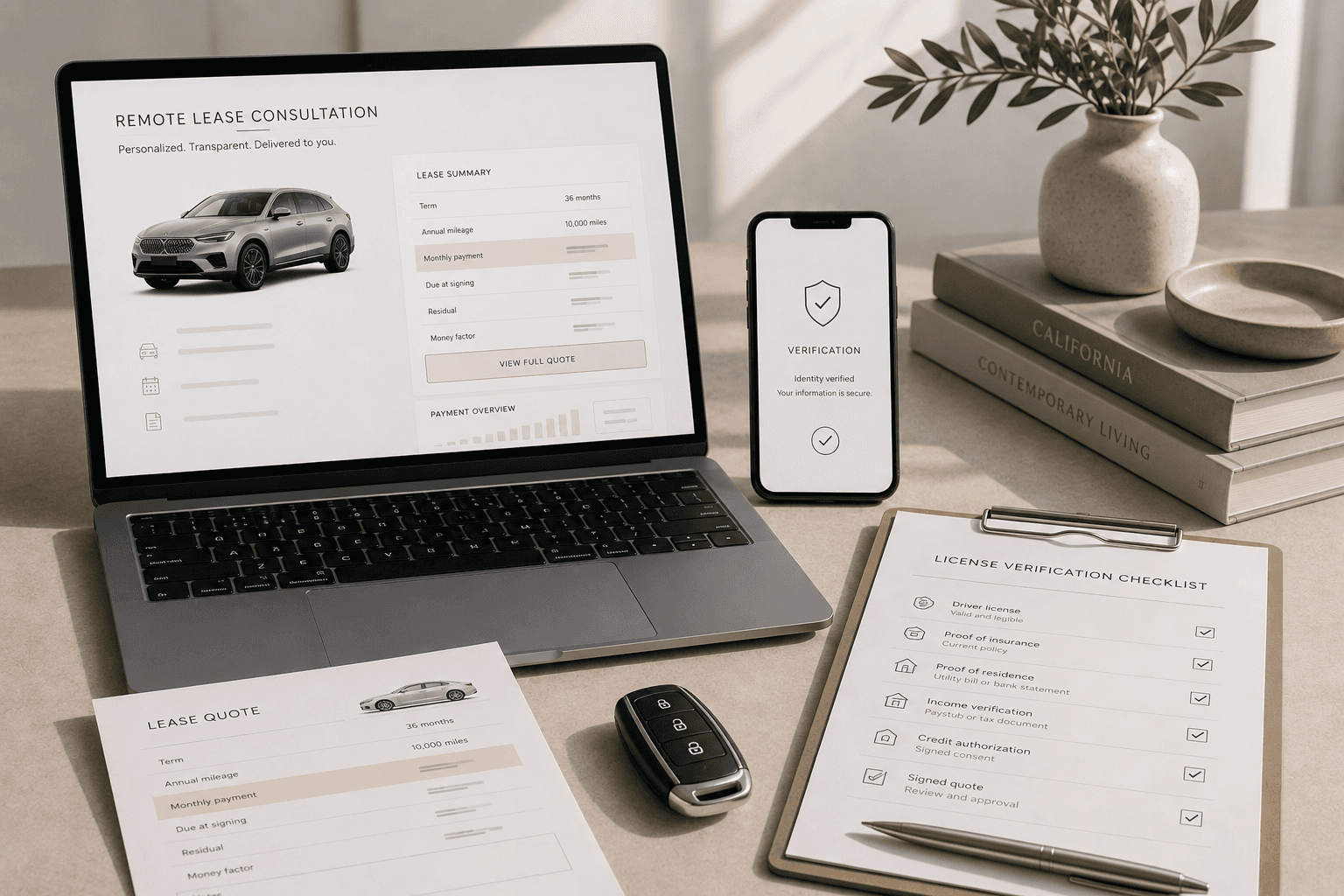
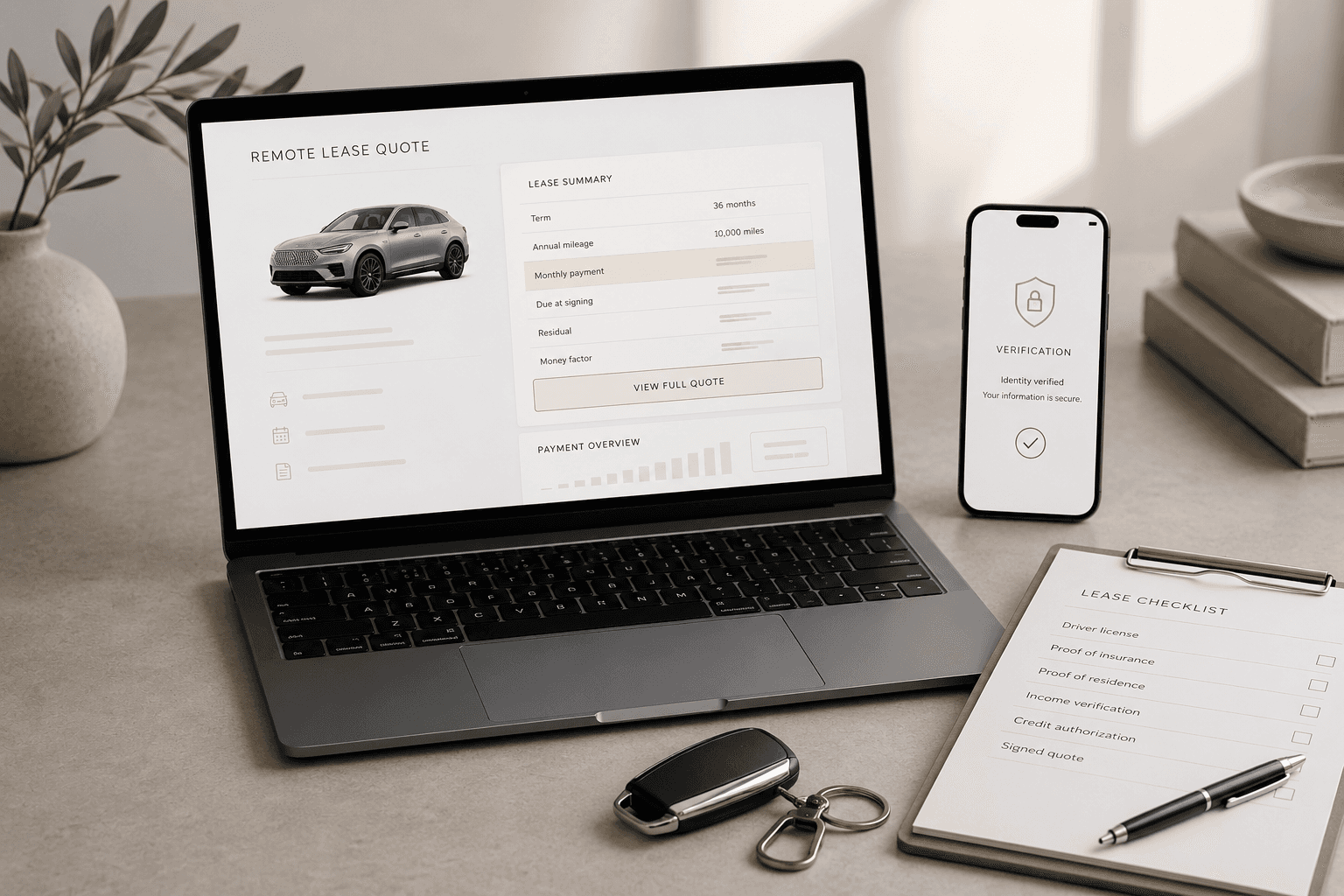
EV and PHEV incentives are time-sensitive and policy-driven. The federal Section 30D Clean Vehicle Credit applies to qualifying new clean-vehicle purchases with specific eligibility rules at IRS.gov. Section 45W (commercial clean vehicle credit) is the route most lease pass-throughs run through, and the IRS publishes those rules separately. California's own clean-vehicle programs publish eligibility, funding status, and any income or vehicle caps. Any 'how much you save' claim must be verified the day the contract is signed against the IRS pages and the California program pages. Lessors that pass through credits should disclose the basis in writing, and Reg M still applies to the rest of the disclosure. The conservative shopper move is to keep the headline savings number out of the decision-making calculation entirely until the lessor disclosure plus the agency page agree on the specific eligibility, and then to revisit the powertrain choice with the verified number rather than the marketed one.
California commute and housing scenarios
Three California scenarios usually decide the question. Scenario one: single-family home, predictable sub-60-mile day, sub-200-mile weekly long trips, well-charged backup. EV leasing is usually the more efficient choice. Scenario two: apartment or condo with shared lot, occasional long trips, no installed 240V at home. PHEV often beats both EV and conventional hybrid here, because the daily envelope can run on charged miles when convenient and on gas when the lot charger is occupied. Scenario three: rural or exurban California, long unplanned trips, charging deserts on routes you actually drive. Conventional hybrid is often the cleanest answer because access risk is eliminated entirely while fuel use still drops. The EV lease readiness checklist linkable asset goes deeper on apartment and condo charging.
Worked walk-through: three California households, three honest answers
Household A lives in a single-family home in Orange County, has a 35-mile daily commute, takes two long trips a year on corridors well-served by DC fast charging, and has reliable space for a 240V circuit. Full EV leasing is usually the cleaner answer here, with the EV readiness checklist mostly running green. Household B lives in a Bay Area apartment with shared lot parking, a 12-mile daily commute, frequent intracity trips, and no installed home charging. A plug-in hybrid often dominates here: the daily envelope can run on charged miles when the lot's chargers are free, on gas when they are not, and the long-trip calendar does not depend on a charger. Household C lives in inland California with regular drives over 200 miles round-trip on routes with thinner fast-charging coverage. A conventional hybrid usually wins here because access risk is eliminated and the fuel-economy improvement is still meaningful. None of these are customer stories; they are pattern descriptions that map common California settings to powertrain choice. The lease quote conversation still applies in all three, with the EV-or-PHEV cases adding the incentive verification step.
Where to take the conversation next
If your honest answer is 'EV with caveats,' the premium EV commuter sub-tower covers Model Y, EQB, BMW i4, and Cadillac LYRIQ at the premium end, and the EV lease readiness checklist linkable asset addresses charging access. If your answer is 'hybrid or PHEV,' the model lease pages above are the right next stop, and the luxury lease quote checklist still applies to the quote conversation. If you want a broker to run the EV-versus-hybrid quote conversation in parallel, the 021 quote-review service can compare both paths.
Frequently Asked Questions
Will I save money leasing an EV in California?
Often, especially when home charging is reliable and incentives apply, but the honest accounting depends on your specific quote, your specific charging cost, and the program structure on the day of signing. Run EPA fueleconomy.gov for MPGe and verify any incentive claim against IRS and California program pages.
Is a plug-in hybrid better than a full EV?
It depends on access. PHEVs reward charging access with electric-only daily miles but keep gasoline as a backup; full EVs are more efficient when access is reliable. The right answer depends on your specific routine, not a generic ranking.
Do hybrids qualify for federal EV credits?
Conventional hybrids generally do not qualify for the Section 30D federal Clean Vehicle Credit. Plug-in hybrids may qualify under specific eligibility rules. Verify against IRS pages on the day of signing.
Can I lease an EV without home charging?
Sometimes, but only when workplace or reliable public charging fits your routine without becoming daily friction. The EV lease readiness checklist linkable asset walks the apartment and condo scenarios, and a PHEV is often the better answer when access is partial.
Related 021 resources: electric vehicle lease lineup, Toyota Prius lease, Hyundai Ioniq 5 lease, premium EV commuter sub-tower, EV apartment readiness checklist, luxury lease quote checklist, compare EV and hybrid options, beat my deal.