General
-
021 Auto Leasing
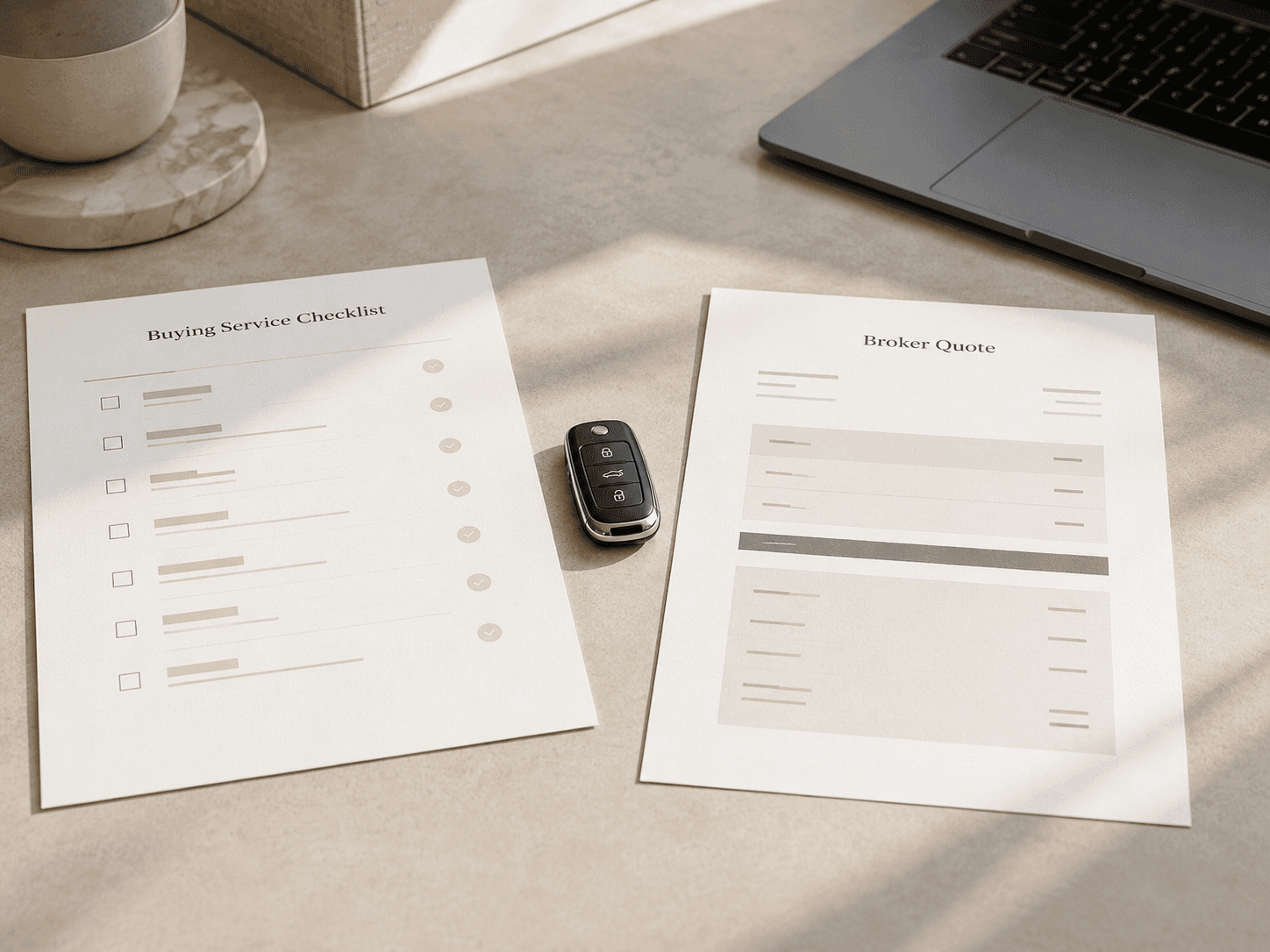
A practical comparison between membership-based car buying services and California autobrokers, organized around legal posture, fee structure, and the buyer profiles each channel actually serves best.
What 'car buying service' covers in this conversation
'Car buying service' here means a third-party platform that connects shoppers with a network of participating dealers under a pre-arranged price program. AAA's Auto Buying Service connects AAA members with approved dealers, with details set by AAA club region. Costco Auto Program connects Costco members with participating dealers under member pricing. Sam's Club Auto Buying does the same for Sam's Club members. Consumer Reports Build & Buy is an independent platform connecting subscribers with participating dealers for transparent pricing. The category shares a structure: platform plus network of dealers, member or subscriber-tied access, no California autobroker agreement.
What 'auto broker' means under California law
California Vehicle Code section 11733 defines an autobroker as a California-licensed dealer with an autobroker endorsement, acting as the agent of the retail buyer. Section 11735 requires a written autobroker agreement before the buyer becomes obligated, naming the make, model, accessories, vehicle price ceiling, autobroker fee, and buyer-agent role. The DMV's Occupational Licensing branch administers the endorsement and is the authoritative verification channel. Calling oneself a broker without holding the endorsement does not meet the statutory bar; the license posture is the central distinction between an autobroker and a buying service.
Fee structure: who pays whom in each path
On a buying service, the platform is funded by a combination of membership (AAA, Costco, Sam's Club), subscription (Consumer Reports), and dealer-side program participation fees. The shopper's marginal cost of using the program is usually zero if the membership is already in place. On an autobroker channel, the buyer pays the autobroker fee disclosed in the section-11735 agreement, on top of any normal lease or finance fees. The fee should be clear in writing before any credit pull. Neither structure is automatically better; they are different ways of funding the same kind of work.
Which shopper profile each path actually fits
A buying service fits a shopper who is already a member of the relevant program, whose target brand is in the program's local network, and who values a pre-arranged price as a baseline rather than wanting individualized negotiation. An autobroker fits a shopper who wants a written buyer-agent agreement, broader sourcing across the California dealer network, and a structured quote workflow with the eight standard line items. The two paths are not mutually exclusive; soliciting quotes from both and picking the better written offer is a clean approach for shoppers who can spare the time.
Verification differs by path
The verification checklist adapts to the path. On the autobroker path: dealer license number, autobroker endorsement verified through DMV, section-11735 agreement read in advance, eight-line-item quote in writing. On the buying service path: program membership active and covering the target brand, participating dealer named, program quote received in writing, comparison run against any credit-union pre-approval per the CFPB's general guidance. Both paths benefit from the standard lease line-item discipline; the legal posture and document set differ. 021 Auto Leasing operates as a California-based broker channel and is not the lender of record on any quote; live monthly figures appear only on the active deal feed.
Why the comparison usually starts with the membership question
The first useful question in a buying-service-versus-broker comparison is whether the buyer already holds the relevant membership. AAA membership, Costco membership, Sam's Club membership, or a Consumer Reports subscription shifts the cost calculus: the marginal cost of using the program is essentially zero for an existing member. For a non-member, the comparison expands to include the cost of joining the program weighed against the expected savings. On a single transaction, the membership math may or may not work; for a household that buys vehicles every few years, the calculation looks different. Naming the membership question first prevents the rest of the comparison from drifting into theoretical territory.
What 'pre-arranged price' actually means in practice
Concierge programs market pre-arranged member pricing as the central benefit. In practice, a pre-arranged price is the program operator's standing arrangement with participating dealers - usually a discount off MSRP or invoice, sometimes a fixed markup, sometimes a tiered structure by program level. The pre-arranged price is a baseline, not a ceiling and not a guarantee that a competing broker or direct dealer cannot match it. The shopper's question is whether the pre-arranged price clears the comparison floor against any other written quote the buyer holds. For a confident negotiator, the floor often clears; for a shopper who would have accepted the dealer's first offer, the program price tends to outperform.
A worked side-by-side scenario
Imagine a Costco member shopping a target configuration with three quotes in play: the Costco Auto Program quote, an autobroker quote, and a direct-dealer quote. Each quote should arrive on the eight standard lease line items. The Costco quote will name the participating dealer and the program's pricing rule. The autobroker quote will name the section-11735 fee and the regional dealer the broker has placed deals with recently. The direct-dealer quote will be on the dealer's normal worksheet. The buyer sets the three quotes on the same page and runs the lifetime cost calculation across all three. The cleanest winner usually has the smallest gap between the eight line items and the lender's eventual pre-contract disclosures.
Edge cases where neither path is the best fit
A shopper with a credit-union pre-approval, a target configuration sitting on a local lot, and dealer-management contacts may transact most efficiently through the dealer directly. A shopper looking for a hard-to-find allocation outside the concierge program's roster may find the autobroker the only viable channel. A shopper without membership in any qualifying organization and without California-licensed broker access in their region may have to weigh travel logistics. Naming the edge cases keeps the post honest: most shoppers fit one of the two main paths cleanly, but the comparison is not exhaustive.
Frequently Asked Questions
Is the AAA Auto Buying Service technically an autobroker?
No. AAA's program connects members with approved dealers under pre-arranged pricing. It is not a California autobroker under Vehicle Code section 11733 and does not generate a section-11735 agreement.
Does Costco Auto Program operate in every state?
Costco Auto Program operates broadly with participating-dealer rosters that vary by manufacturer and region. Coverage details are set by the program; check the program for current scope on the buyer's target brand.
Can a buying service negotiate the deal for me?
Buying services typically apply a pre-arranged program price; the buyer transacts with the participating dealer directly. The platform does not negotiate individually on each buyer's quote the way a California autobroker can.
Should I run both paths in parallel?
Some shoppers do; soliciting quotes from a buying service and a California autobroker in parallel and picking the better written offer is a reasonable approach. Neither channel locks the buyer in until a written agreement is signed.
Do membership programs guarantee me the lowest price?
No. The pre-arranged member price is a baseline. A confident negotiator with a credit-union pre-approval may match or beat it on a specific transaction. Comparison against any competing written quote is the honest test.
Related 021 resources: car concierge, definition, evaluation, California broker shopper playbook, compare service paths.