General
-
021 Auto Leasing
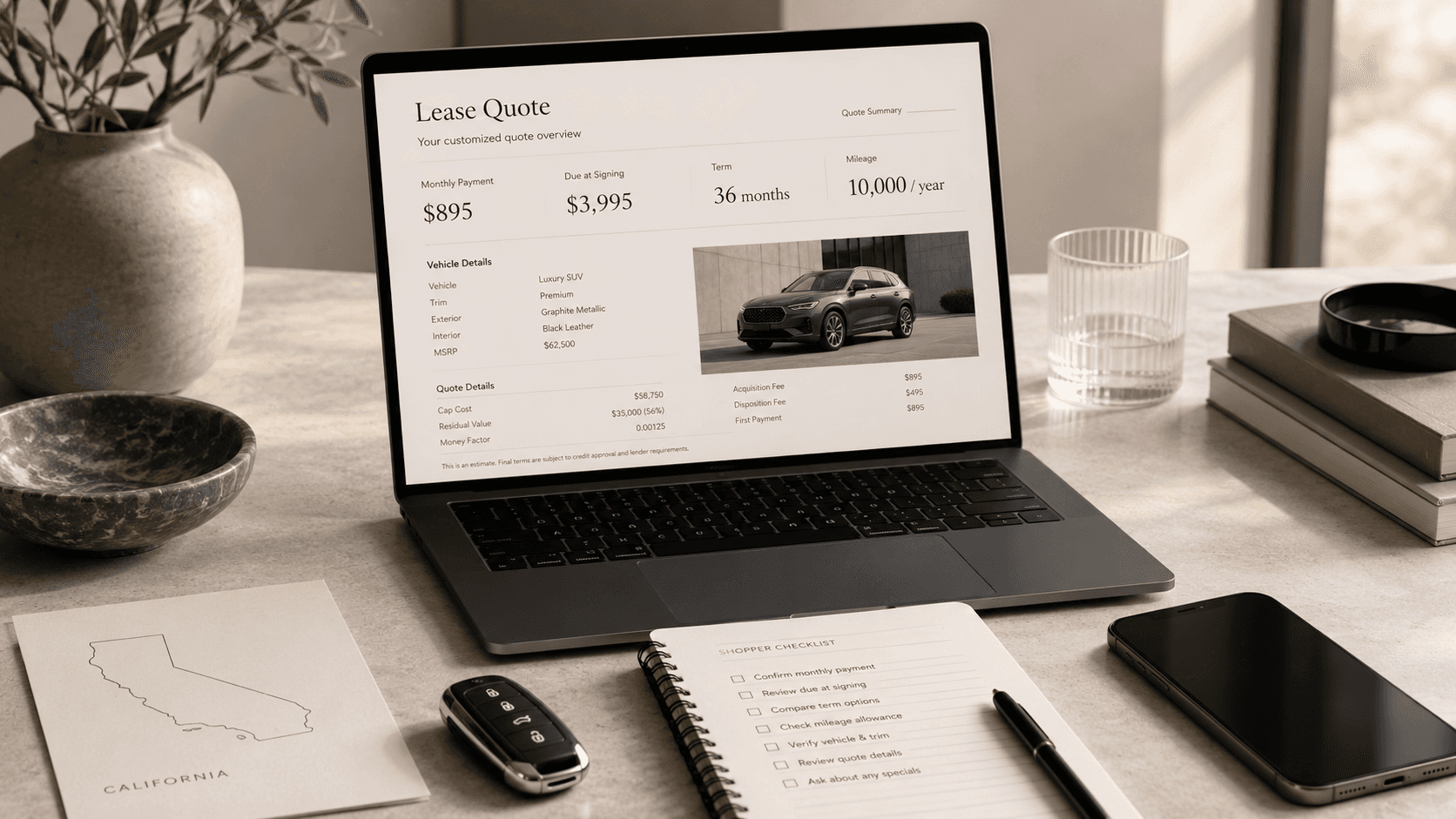
A seven-step playbook for California shoppers considering a broker or lease broker, anchored to the California autobroker statute and the standard lease line items, with explicit handoffs to the relevant evergreen broker pages.
Step 1: scope the request before contacting any broker
The shopper does the scoping work, not the broker. A clean scope answers seven questions in writing: make, model, trim, drive type, term, annual mileage, and target month. The reason is mechanical: the captive lender's residual percentage and money factor depend on the configuration and program window, and a vague request returns a vague quote. The CFPB's leasing guidance frames a lease as a fixed-term rental with specific contractual obligations; the more precisely the scope is named upfront, the more comparable the broker's quote will be to any competing quote. Five minutes of scoping in a Google Doc beats two weeks of email ping-pong.
Step 2: verify the broker's California license
Before any credit application, the shopper verifies the broker. California Vehicle Code section 11733 defines an autobroker as a California-licensed dealer with an autobroker endorsement, and the DMV's Occupational Licensing branch administers the endorsement. Asking for the dealer license number and verifying it through DMV is a two-minute task that filters out most of the noise. A broker who provides the number and walks the shopper through verification is operating inside the rules. A broker who resists is signaling that the verification step would not pass; either way, the shopper has the answer they need. This step is small and load-bearing - it sets the ground for everything else in the playbook.
Step 3: request the autobroker agreement, in writing, first
The autobroker agreement under California Vehicle Code section 11735 is a precondition, not a follow-up. It must name the make, model, accessories, vehicle price ceiling, autobroker fee, and the broker's buyer-agent role, and it must be provided before the buyer becomes obligated. A reputable broker has the agreement template ready and produces it on request. A broker that responds with 'we'll send the paperwork after the credit application' has the order reversed and is asking the shopper to share credit data without first knowing the fee structure. The agreement is the document that keeps the deal honest; reading it before signing is more important than the exact prose of the broker's website.
Step 4: ask for the eight standard lease quote line items
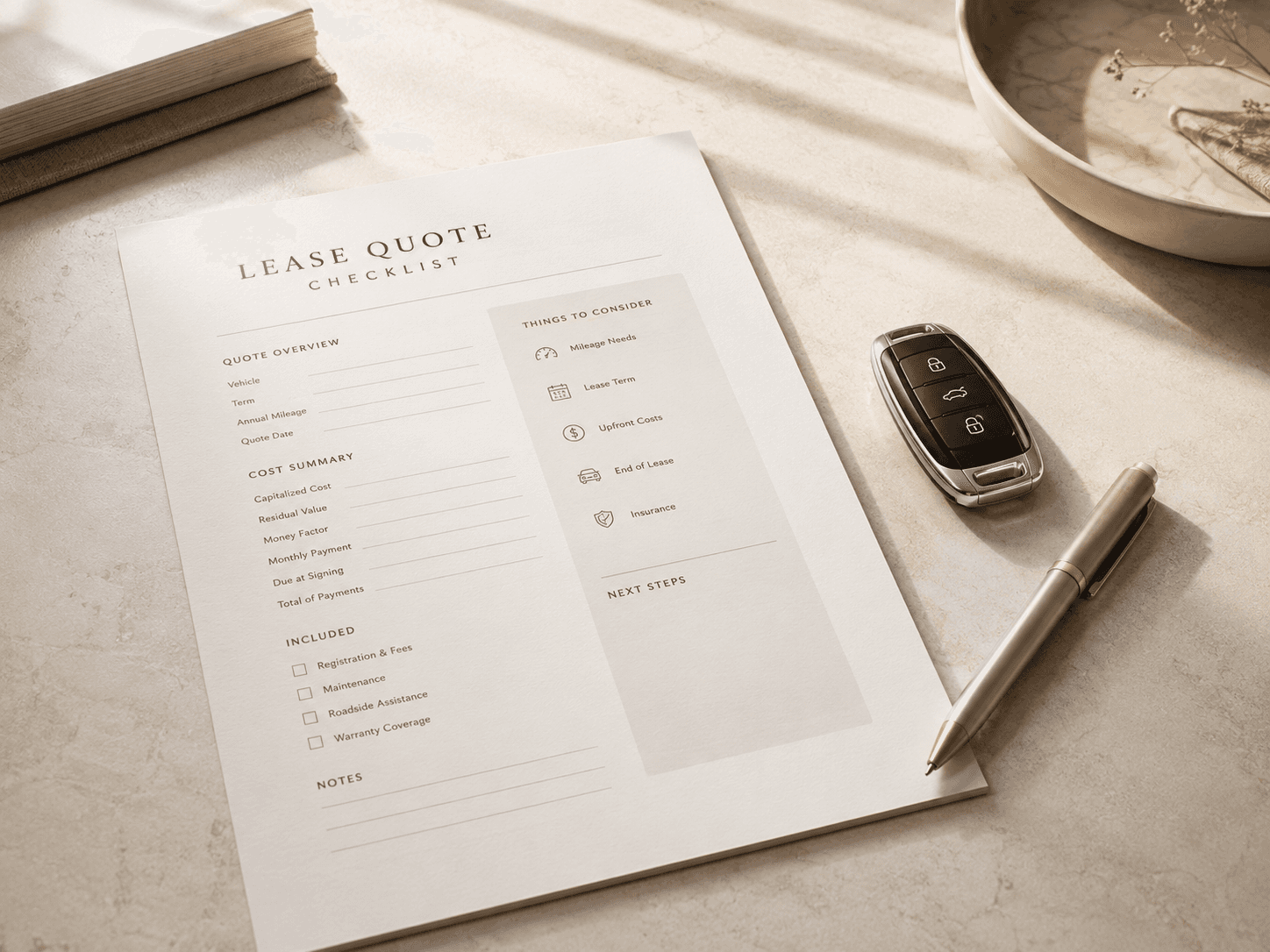
A clean lease quote always shows eight items in writing: agreed cap cost, any cap cost reduction (down payment or rebate), residual value, money factor, term, mileage allowance, acquisition fee, and total due at signing. California sales tax on the lease is collected per payment based on the rate at the lessee's California address, not as one upfront charge on the full vehicle price. The same line items will appear on the lender's pre-contract disclosures under Regulation M at signing, which is the honest comparison test: the broker's quote should match the lender's contract. If a line is missing from the broker quote, the shopper asks for it before any credit pull. Most reputable brokers will provide it without friction.
Step 5: compare against an alternative source before signing
The CFPB's general guidance on auto financing recommends comparing dealer financing against a pre-approval from a bank or credit union. The same principle applies on a lease: the broker's quote becomes much more useful when it sits next to an independent quote, whether that is a credit-union lease offer, a competing broker's quote, or a direct-dealer worksheet from a different store. The compare step is not about catching the broker out; it is about keeping the math honest. A broker quote that holds up against an independent quote is worth signing; a broker quote that starts moving when an alternative appears is worth a second look at the line items.
Step 6: route specific situations to the right evergreen page
The playbook is general; specific situations have their own evergreen owners on the 021 site. A shopper in the LA metro should read the LA-specific lease broker page for freeway-radius pickup logistics. A shopper running an all-online workflow should read the online lease broker page for what stays in person and what goes remote. A shopper considering luxury, exotic, or BMW-specific deals should read the corresponding evergreen pages for the captive-program-specific patterns. A shopper trying to distinguish broker from auto broker, dealer, F&I manager, and concierge service should read the lease broker definition page. The blog post is the connector; the evergreen pages are the authoritative answers.
Step 7: sign, deliver, and verify the contract matches the quote
On signing day the lender's pre-contract disclosures under Regulation M arrive in writing. The cap cost, residual, money factor, term, mileage, acquisition fee, and due-at-signing on the contract should match what the broker quoted. If any line differs, the shopper pauses and asks why; a clean broker workflow has no surprises between quote and contract because both are built off the same captive program window. After delivery, the lender of record handles ongoing servicing and any end-of-lease obligations under the contract terms. The broker's role on the deal is essentially complete at handover, except for occasional follow-up logistics.
Three California-specific patterns the playbook bakes in
The playbook bakes in three patterns specific to California. The autobroker endorsement under Vehicle Code section 11733 means the buyer can verify the broker's license before any data sharing - a capability not every state's framework provides. CDTFA's per-payment lease tax treatment means the buyer should pay attention to the garaging address on the contract rather than the dealer's location. The CFPB's pre-approval guidance applies regardless of channel and is a useful baseline for any California auto financing decision. Together those three patterns shape the workflow more than any general broker advice would.
Why this is a playbook and not a sales pitch
California shoppers see a lot of broker content that reads like marketing for the broker channel. This playbook is the opposite. It assumes the buyer has not decided yet, names the cases where a broker channel is the wrong fit, and gives the buyer the framework to walk away cleanly when the answer is no. The California autobroker statute under Vehicle Code section 11733 sets the legal posture; Regulation M sets the lease disclosure rules. The playbook is built around those two anchors so it survives changes in marketing language. A reader who finishes the playbook with a clear 'no broker' decision has gotten value from it, just as much as a reader who finishes with a clear 'yes broker' decision.
Step 0: decide whether a broker fits the deal at all
Before the seven-step playbook starts, a small zero-step matters: deciding whether the broker channel is the right path on this specific transaction. If the configuration is a high-volume base trim sitting at every nearby dealership and the buyer enjoys in-person negotiation, the broker channel is unnecessary; the dealer-direct path covers it. If the buyer is already a member of a qualifying concierge program (AAA, Costco, Sam's Club, Consumer Reports) and the target brand is on the program's local roster, that path may be the lower-friction starting point. The broker channel earns its fee when sourcing reach, structured paperwork, or cycle time matter - and that decision is honest only when made before the first email goes out.
Workflow failure modes and recovery patterns
Four failure modes appear most often in real broker-mediated leases and each has a recovery pattern. Mode one: the lender comes back with a different program window than the quote assumed; recovery is renegotiating against the new program or exiting under the autobroker agreement's terms. Mode two: the dealer's F&I lane introduces add-ons that move the out-the-door cost; recovery is declining the add-ons at signing without adjusting the lease economics. Mode three: the captive lender's residual or money factor at signing differs from the broker's quote; recovery is asking for the program-window confirmation in writing before signing. Mode four: pickup logistics shift after the deal is approved; recovery is documenting the new logistics in writing rather than accepting verbal updates. Each recovery is small and protects the deal.
Where to take a deeper question by topic area
Specific situations sit in different evergreen pages on the 021 site. A lease broker definition question goes to the lease broker definition page. An LA-metro pickup question goes to the LA lease broker page. An online lease broker question goes to the online lease broker page. A luxury or exotic question goes to the luxury or exotic lease broker research pages. A car concierge versus broker question goes to the car concierge research page or the car buying service guide. An EV-specific incentive question goes to the EV lease broker checklist blog and the EV lease evergreen page. The mother-tower playbook is the connector; the evergreen pages and topic-specific blogs are the authoritative answers, and the shopper saves time by routing the question to the right owner instead of trying to find it all in one post.
Frequently Asked Questions
Do I have to use a broker if I want a lease in California?
No. The broker channel is one option among several. A direct dealer relationship, a credit-union lease pre-approval, or a concierge program may fit other shoppers better. The playbook helps decide whether the broker channel earns its fee on a specific transaction.
Can a broker get me a better residual value than the dealer?
No. Residual percentages are set by the captive lender as part of the program window and disclosed under Regulation M; a broker cannot rewrite them. What a broker can do is confirm the program is active and applied to the specific configuration.
What is the autobroker fee usually for?
The autobroker fee compensates the broker for sourcing the quote, negotiating with selling dealers, and handling the transaction logistics on behalf of the buyer. California Vehicle Code section 11735 requires the fee to be disclosed in the written agreement before the buyer becomes obligated.
Does the broker handle the trade-in?
A broker can include the trade in the quote, but the trade is appraised, paid out, and titled out at the selling dealer of record at delivery. The trade math should appear on the same worksheet as the lease line items, not on a separate page.
Can the broker tell me whether I qualify for an EV tax credit?
Section 30D Clean Vehicle Credit eligibility depends on vehicle qualification, MSRP limits, taxpayer income, and other IRS rules. A broker can flag whether the configuration is on the IRS's qualifying list at the time of the quote, but qualification is a tax decision, not a broker decision.
Where do I look up California autobroker rules myself?
California Vehicle Code sections 11733 and 11735 are published on the official California legislative information site (leginfo). California DMV's Occupational Licensing branch publishes broker and dealer licensing details on the DMV portal.
Related 021 resources: lease broker, definition, lease broker, request a broker-reviewed lease quote.